Can I picture myself there?
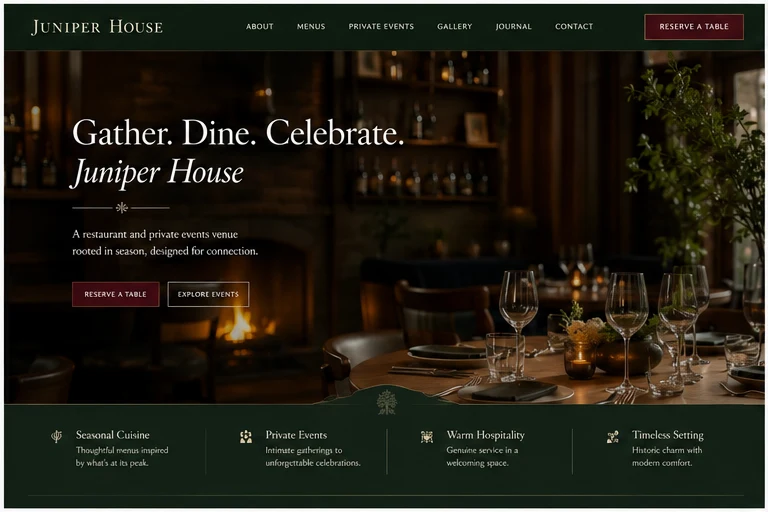
Photography, art direction, voice, and pacing should communicate atmosphere before the visitor reads every detail.
Restaurant & Hospitality Web Design
Custom websites for restaurants, cafés, bakeries, event venues, caterers, and hospitality brands across the United States. We bring the atmosphere, offer, menu, reservations, and event path together in one fast, inviting guest experience.
The guest decision
Guests may arrive ready to book, compare a menu, plan an event, check dietary details, or simply decide whether the place feels right. The design has to move quickly while keeping the brand memorable.
Photography, art direction, voice, and pacing should communicate atmosphere before the visitor reads every detail.
Menus, hours, location, accessibility, policies, events, and dietary notes should be easy to reach from a phone.
The next step should match the occasion: reserve a table, place an order, buy a gift card, or discuss a private event.
Hospitality search structure
Search visibility grows from accurate business information, crawlable menu and experience content, useful event paths, technical health, and consistent profiles—not from hiding essential details inside an image or PDF.
Present current menus, services, dietary information, and signature experiences in accessible page content that can be maintained.
Separate dining, catering, private events, weddings, or classes where the guest questions and conversion path truly differ.
Keep hours, address, contact, reservation links, parking, and accessibility details consistent across the site and relevant profiles.
Track high-value actions such as reservations, online orders, gift cards, calls, and qualified event inquiries where integrations allow it.
Hospitality design direction
Juniper House is an original Hullinger Digital concept showing how seasonal dining, private events, and atmosphere can share one strong visual system while keeping each guest path distinct.
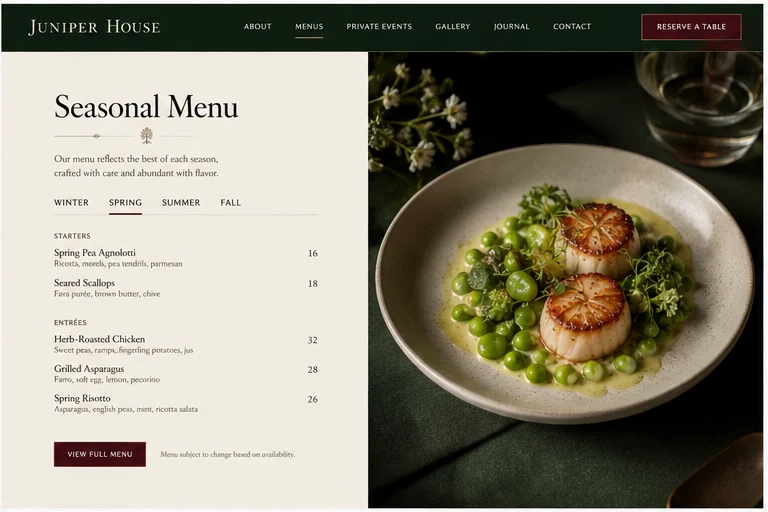
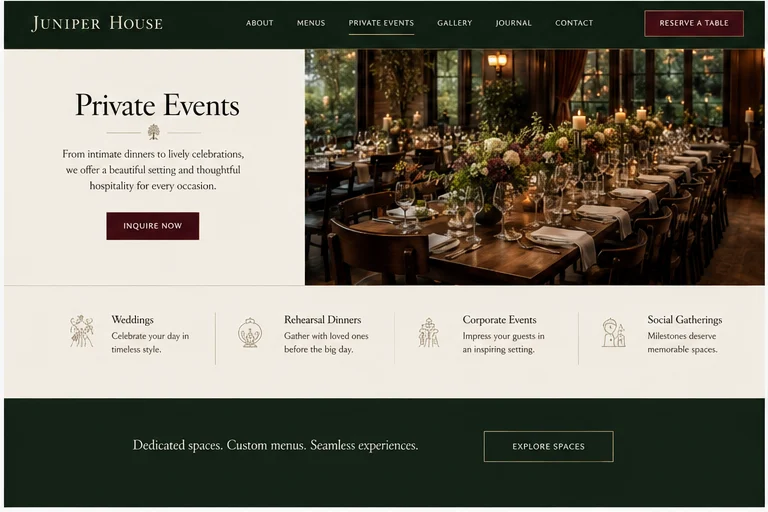
Juniper House is an original design concept created by Hullinger Digital. It is not client work and does not imply reservations, traffic, ranking, or revenue results.
Read the clearly labeled project studies ↗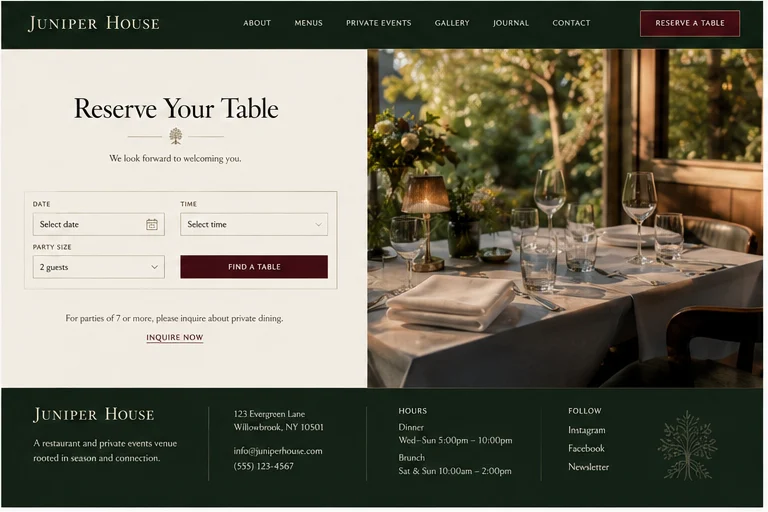
Remove the extra step
Reservation, ordering, event, and gift-card tools can be integrated into the branded experience instead of sending the guest through a confusing chain of links. The right approach depends on the restaurant's existing systems and operating process.
What a project can include
The scope follows the brand, location count, menu complexity, reservation tools, event business, and internal ability to keep content current.
A strong fit
This approach fits independent restaurants, cafés, bakeries, caterers, private-event venues, boutique hospitality groups, and experience-led food brands. Menus, pricing, policies, awards, and dietary claims remain controlled by the business and must be kept accurate.
Questions before you start
Yes. A menu can be structured as accessible page content rather than only a PDF or image. The editing workflow should make seasonal updates practical for the team.
Usually, yes. The available experience depends on the provider's integration options. We review branding, tracking, accessibility, and the handoff before recommending an approach.
Yes. Event capacity, occasion, preferred date, food and beverage needs, budget range, and other useful details can be collected without overwhelming the first form.
Accurate business information, useful local and menu content, strong technical performance, consistent profiles, reviews, and a site that makes the desired action easy all contribute. Rankings are never guaranteed.
Yes. Each real location can have a useful page with accurate hours, address, menu or offering differences, reservations, and unique information rather than duplicated filler.
Built around the real business
Start with a guided website plan, or send the current site for a practical review of its design, search foundation, and customer path.